Siding materials · vinyl

Vinyl siding: low upkeep, if it is hung right.

Vinyl has the lowest upfront cost, never needs painting and washes clean with a hose. In North Texas it lives or dies by installation: it has to be free to move with the heat and fastened to resist spring winds.
How vinyl behaves in North Texas

  • Heat: vinyl expands and contracts noticeably. Panels must hang loosely on their nails with gaps at the ends, or they ripple and buckle on hot walls.
  • Reflected sunlight: strong reflections from neighboring windows can soften and warp panels on a wall.
  • Hail: vinyl can crack or puncture, especially thinner or older panels and in cold weather.
  • Wind: choose a product with a suitable wind-load rating and install it with the specified fastening.
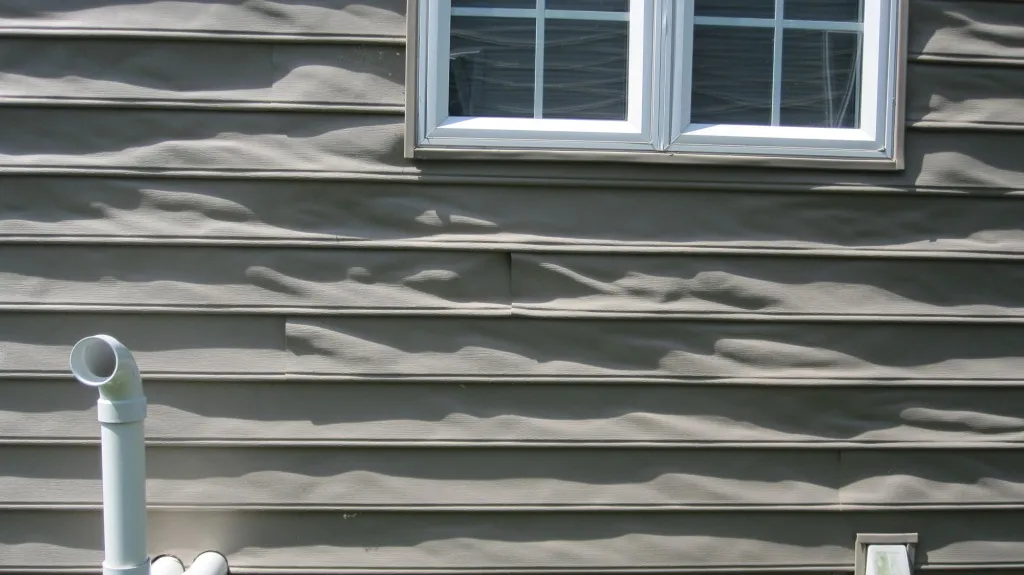
Vinyl siding panels warped and rippled by heat below a window
Vinyl panels warped by heat — reflected sunlight from nearby windows can do this on a single wall. Photo: ArmchairBuilder.com / Flickr, CC BY 2.0.

Choosing a vinyl product

Thicker panels resist dents and waves better. Insulated vinyl has a rigid foam backing that makes panels stiffer and more impact-resistant. Darker colors absorb more heat, so pick a product rated for dark colors if you want one.

What a correct installation looks like

  • Nails in the center of the slots, not driven tight — panels should slide by hand
  • Expansion gaps at corners, trim and J-channel
  • A weather-resistive barrier and flashing behind the vinyl — vinyl sheds rain but is not waterproof
  • Starter strip and locking rows fully engaged for wind resistance

Vinyl is a rain screen, not a seal. Water that gets behind it must be able to drain — which is why the housewrap and flashing underneath matter as much as the panels.

Repairs

Cracked or blown-off panels can usually be replaced individually. Color matching is the tricky part, because older vinyl fades; sometimes a panel is taken from a hidden wall and the new one goes there instead.

Common problems

Common vinyl siding problems.

What you see, what usually causes it and how urgent it is — sorted from “act this week” to “keep an eye on it”.

  • Urgent

    Loose or missing panels

    What you see
    Panels hanging open, slipped out of place or blown off — often at corners, gable ends and upper walls after high winds.
    Likely cause
    Wind lifting panels that were not fully locked or fastened, or brittle older vinyl.
    What to do
    Photograph it and note the storm date, keep people away from loose pieces, and get it closed up quickly — the open wall behind lets the next rain straight in.
    After a storm →
  • Urgent

    Rot around windows or where a roof meets a wall

    What you see
    Soft or stained siding and trim below window corners, or a dark streak running down the wall below a roof line.
    Likely cause
    Missing or failed flashing — often no kick-out flashing where a roof edge dies into a sided wall — sending water behind the siding.
    What to do
    Have it opened up and inspected soon. Replacing the boards without fixing the flashing only hides the leak.
    Siding repair →
  • Fix soon

    Cracks, holes or chips after hail

    What you see
    Cracked or punctured vinyl, chipped fiber cement edges, dented wood, plus dents in gutters, vents and window wraps.
    Likely cause
    Hail impact. Vinyl is most likely to crack, especially older panels and in cold weather.
    What to do
    Photograph every wall before anything is cleaned, check your policy and file promptly, then get a line-item scope for your adjuster.
    Hail damage guide →
  • Fix soon

    Gaps and cracked caulk at trim and windows

    What you see
    Open joints, cracked or shrunken sealant around windows, doors, corner boards and butt joints.
    Likely cause
    Sealant ageing in Texas sun and heat, and normal movement of the house.
    What to do
    Cheap to fix and expensive to ignore: remove failed caulk and reseal with a quality exterior sealant, especially on south and west walls.
    Siding repair →

See all common problems

Materials & colors

Try colors on a North Texas house.

Brick below, siding above — the way most homes around Plano are built. Pick siding, trim and brick to see the combination.

House preview with the selected siding, trim and brick colors
Warm white siding · Bright white trim · Red brick
Siding
Trim
Brick / stone
Get free samples of this combination

Screen colors are approximate and these are generic inspiration shades, not manufacturer colors. We bring physical samples to your free estimate.

Color and material, in North Texas

  • Fiber cement Can be painted any color. Factory finishes go longer between repaints; site painting lets you pick any shade.
  • Vinyl The color runs through the material and fades slowly. Dark colors need a product rated for them, or panels can warp in Texas sun.
  • Engineered wood Comes primed or prefinished. Primed boards must be painted soon after installation — in any color you like.
  • Heat Lighter colors absorb less heat — worth considering on long south- and west-facing walls.
  • Brick Most DFW homes pair siding with brick or stone. Choose siding and trim with the brick’s undertone in mind: warm reds and tans, or cool grays.
  • HOA Many Plano-area neighborhoods have an HOA with approved color palettes — check before you order.

Compare the four materials.

There is no universal winner. The right siding depends on your walls, your budget and how much upkeep you want.

Fiber cement

Steady in the heat

Noncombustible and durable, with a familiar painted look.

Fiber cement siding →
Vinyl

Low routine upkeep

Budget-friendly and easy to wash — if it is hung with room to move.

Engineered wood

Warm, tailored character

A wood look with factory protection — every cut edge must be sealed.

Engineered wood siding →
Natural wood

Material with a patina

Beautiful and repairable, with a disciplined paint cycle.

Wood siding repair →

FAQ

Vinyl siding questions.

Why is my vinyl siding wavy?

Usually because panels were nailed too tight or without expansion gaps, so they cannot move as they heat up. Re-hanging the affected panels correctly often fixes it.

Is vinyl a good choice where hail is common?

It is the most budget-friendly option, but it is more likely to crack in hail than fiber cement. Thicker or insulated vinyl holds up better. Consider how often your area sees hail and how you feel about repairs.

Can you replace just a few damaged vinyl panels?

Yes. Individual panels can be unlocked and replaced. We match color as closely as possible and, if needed, swap in a panel from a less visible wall.

Does vinyl siding need painting?

No. The color goes through the material. It does fade slowly over time, which matters most when you need to match a repair.

Plano, TX

Weighing vinyl for your house?

We will tell you honestly where it makes sense and where another material will serve you better.