Plano, TX · targeted repairs
Siding repair that fixes the cause, not just the board.
Cracked panels, soft spots near the ground, gaps at trim and peeling paint usually point to water getting somewhere it should not. We find where — then repair it.
Common repairs we handle
- Cracked, split or hail-dented boards and panels
- Loose or blown-off vinyl panels after high winds
- Rot or swelling at the bottom edge of walls and at ground clearance
- Failed caulk and sealant around windows, doors and trim
- Damaged corner boards, trim, soffit and fascia
- Missing or incorrect flashing at roof-to-wall joints
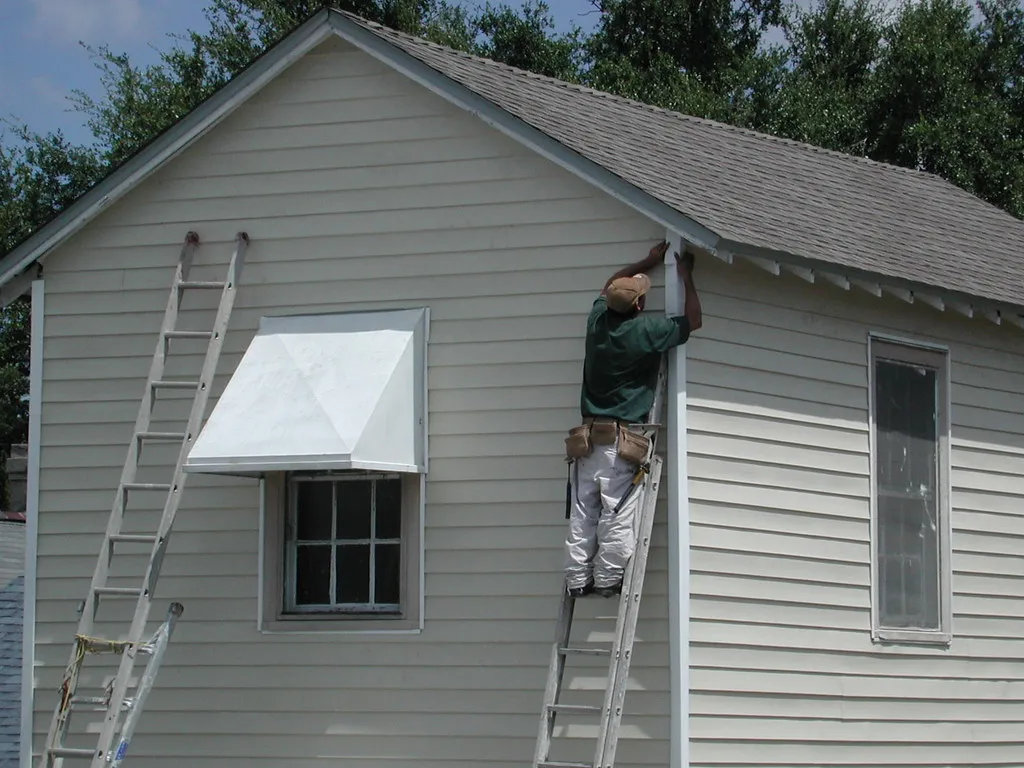
Signs you should not ignore
Soft spots at the bottom of a wall, paint that keeps blistering in the same place, persistent dark streaks, or new gaps at trim are all signs that moisture is getting behind the siding. The longer water stays in the wall, the more likely a small repair becomes sheathing or framing work.
Matching tip: if you have leftover boards, product labels or paint color names from the original installation, keep them. They make an invisible repair much easier.
Repair or replace?
Repair is usually the better choice when damage is limited to a few boards or one wall and the material can still be matched. Replacement starts to make sense when damage is spread across several elevations, the product is discontinued, or moisture has already reached the sheathing. See siding replacement for what a full project includes.
Common problems
What that spot on your siding means.
What you see, what usually causes it and how urgent it is — sorted from “act this week” to “keep an eye on it”.
-
Urgent
Loose or missing panels
- What you see
- Panels hanging open, slipped out of place or blown off — often at corners, gable ends and upper walls after high winds.
- Likely cause
- Wind lifting panels that were not fully locked or fastened, or brittle older vinyl.
- What to do
- Photograph it and note the storm date, keep people away from loose pieces, and get it closed up quickly — the open wall behind lets the next rain straight in.
-
Urgent
Rot around windows or where a roof meets a wall
- What you see
- Soft or stained siding and trim below window corners, or a dark streak running down the wall below a roof line.
- Likely cause
- Missing or failed flashing — often no kick-out flashing where a roof edge dies into a sided wall — sending water behind the siding.
- What to do
- Have it opened up and inspected soon. Replacing the boards without fixing the flashing only hides the leak.
-
Fix soon
Cracks, holes or chips after hail
- What you see
- Cracked or punctured vinyl, chipped fiber cement edges, dented wood, plus dents in gutters, vents and window wraps.
- Likely cause
- Hail impact. Vinyl is most likely to crack, especially older panels and in cold weather.
- What to do
- Photograph every wall before anything is cleaned, check your policy and file promptly, then get a line-item scope for your adjuster.
-
Fix soon
Soft, rotted boards at the bottom of the wall
- What you see
- The lowest boards feel soft when pressed, look swollen or have peeling paint that keeps coming back.
- Likely cause
- Sprinkler spray, rain splashing off the ground, downspouts dumping next to the wall and no clearance above soil or mulch.
- What to do
- Redirect sprinklers and downspouts now. Damaged boards need replacing — together with the clearance problem, or they will rot again.
-
Fix soon
Swollen, flaking hardboard edges
- What you see
- The bottom edge of lap boards is puffy, rough or crumbling, sometimes with a waffle-like texture where the surface has broken.
- Likely cause
- Hardboard (common on 1980s–90s homes) soaking up water through edges and nail holes once the paint film fails.
- What to do
- Paint cannot save swollen boards. Replace them — with fiber cement or engineered wood if the problem is on several walls.
-
Fix soon
Delaminating plywood panels (T1-11)
- What you see
- Grooved panel siding with separating layers at the bottom edge and seams, often on gables, chimney chases or garage fronts.
- Likely cause
- Water entering the panel edges after the paint failed; poor flashing where panels meet trim or the roof.
- What to do
- Delaminated panels need replacing. Because they often double as wall sheathing, check what is behind them at the same time.
FAQ
Siding repair questions.
How do I know if my siding needs repair or replacement?
Repair fits when damage is limited to a few boards or one wall, the wall behind is dry and the material can still be matched. Replacement makes more sense when damage shows up on several walls, the product is discontinued or moisture has reached the sheathing.
Why is my siding rotting at the bottom of the wall?
The bottom course takes the most water: sprinkler spray, rain splashing off the ground, mulch or soil touching the boards and downspouts that dump next to the wall. Fixing the board without fixing the clearance and drainage means it will rot again.
Can you match siding that is 10 or 20 years old?
Usually. We identify the profile, exposure and texture and match the paint color. Leftover boards or product labels from the original installation make it easier. If the product is discontinued, we show you the closest options first.
How much does siding repair cost?
It depends on how many boards and how much trim are involved, whether the material can be matched, whether there is hidden damage behind it and how much repainting is needed to blend the repair. A free written estimate prices each part separately.
Is it worth repairing siding before I sell my house?
Often. Buyers’ inspectors look for soft boards, rot, gaps at trim and peeling paint, and those findings tend to become negotiation points. Fixing them first usually costs less than the discount a buyer will ask for.
Plano, TX
Something on the wall does not look right?
Send a few photos with the estimate request and we will tell you what we see.